THE CONVERSATION
A BFA THESIS BY OLIVIA FIRNENO
The Conversation is a thesis project built on a simple premise: materials meant to help people with mental illness should feel as if they were made for them.
Nearly 1 in 5 adults in the United States lives with a mental illness. However, mental illness is rarely as clean as a diagnosis and a treatment plan. Instead, it’s a messy, inconsistent, and deeply personal process. For many, it is a confusing, years-long ordeal with no clear path forward.
For me, that reality became personal. In November of 2025, following a mental health crisis, I received diagnoses of Bipolar I and Borderline Personality Disorder.
Mental health has a design problem. The materials meant to help people with mental illness rarely feel like they were made for them. Evidence-based therapies exist, and medications that work exist. But therapy is inaccessible to many, and the stigma surrounding psychiatric medication makes adherence difficult. The gap is not always one of resources. Often, it is one of form. People experiencing mental health issues are often in a vulnerable state that current materials don’t account for.
The Conversation is a thesis project built on a simple premise: materials meant to help people with mental illness should feel as if they were made for them.

Dialectical Behavior Therapy is a module-based therapy, with four modules: Mindfulness, Interpersonal Effectiveness, Emotional Regulation, and Distress Tolerance. Within each module come skills that one practices and comes back to in moments of need. Overall, Dialectical Behavioral Therapy, or DBT, is one of the most effective treatments for Borderline Personality Disorder and overall general emotional dysregulation. The evidence is consistent. But DBT, as it is typically delivered, through dense workbooks and clinical handouts, fails to communicate what it contains. This information is often dense, clinical, and hard to return to. People leave treatment with a binder of skills they never open again. The information exists; the form makes it difficult to return to.
The problem looks different, but runs just as deep on the medication side. Nearly 50% of people diagnosed with Bipolar Disorder stop taking their medication within the first year. Stigma, confusion, and access barriers all contribute. Psychiatric medications carry a social weight that most other medications do not, and the packaging does nothing to help.
The Conversation addresses both failures directly.
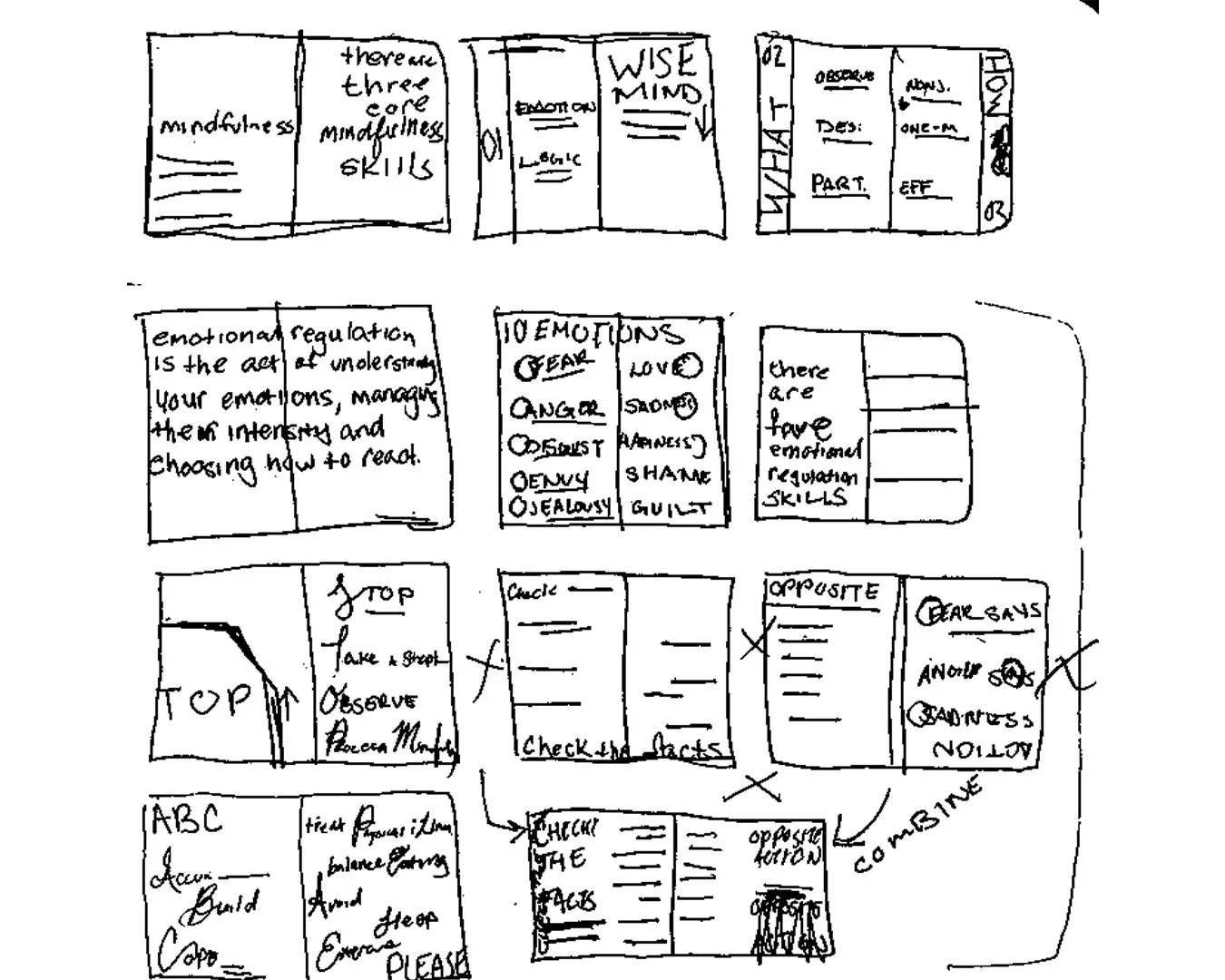
The initial direction for the DBT material was posters. That approach was abandoned quickly: the content was too dense to survive a single-surface format without becoming exactly the kind of clinical wall of text the project was trying to move away from. Zines solved the problem. Spread across multiple pages, the material could breathe, be sequenced, and be designed for someone moving through it at their own pace. Printed on a risograph and hand-bound, each zine carries a tactile, personal quality that no clinical handout can replicate.
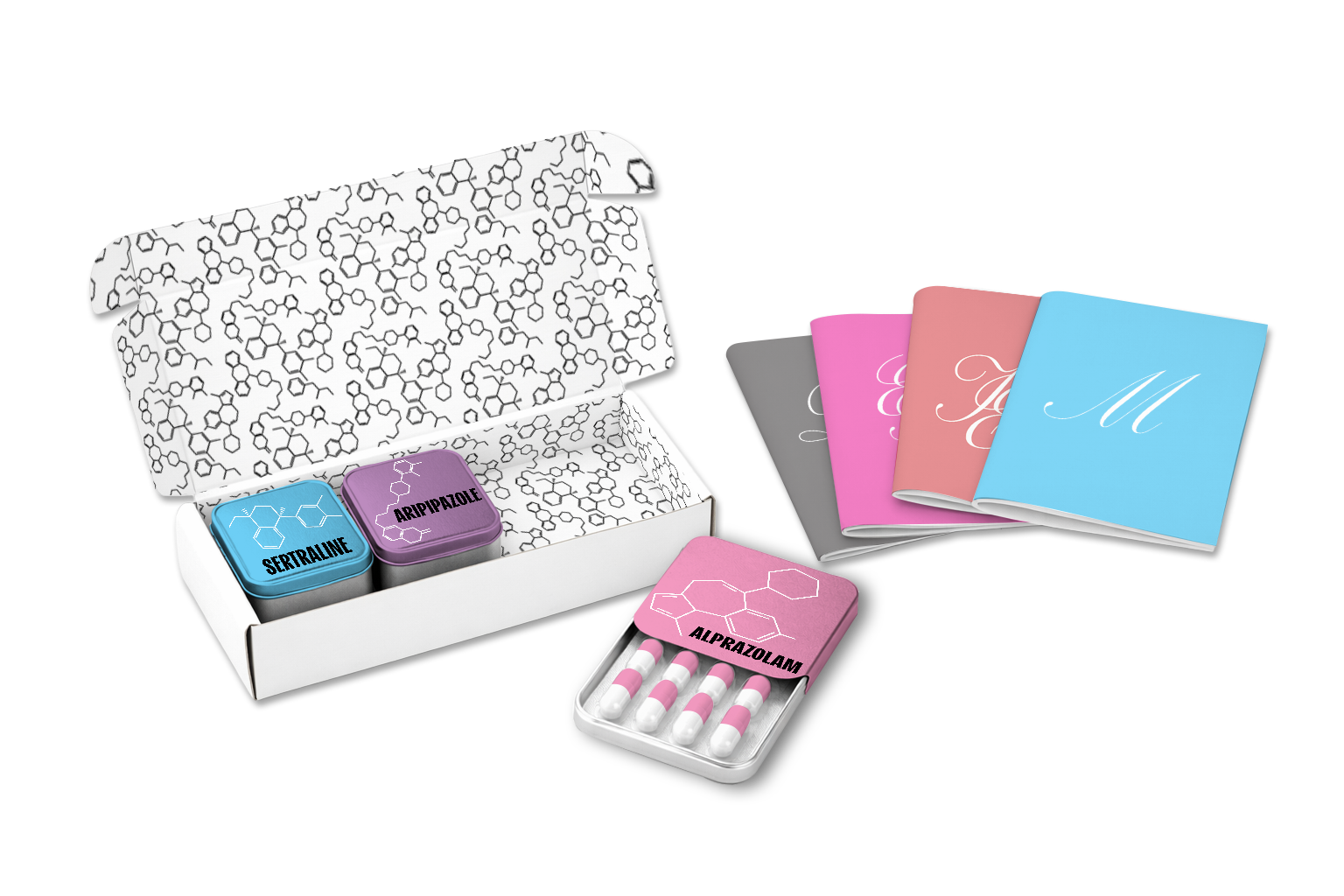
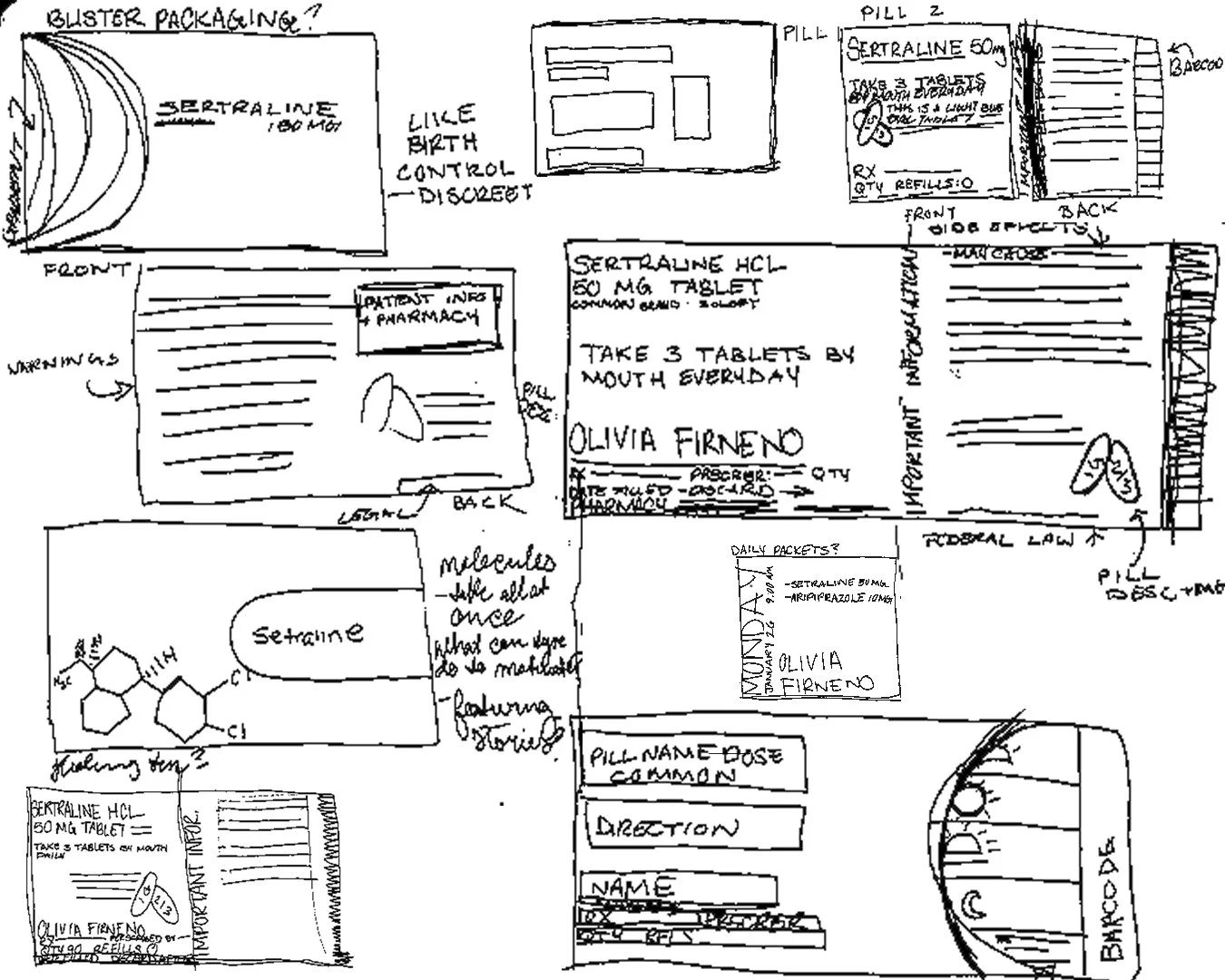
The packaging system was inspired by Neuro Mints, a supplement brand whose metal tin format carries an everyday, almost utilitarian quality that generic pill bottles never achieve. That format became the foundation: a subtle metal tin that sits comfortably alongside the other objects in a person's life rather than apart from them. The visual identity of each tin is built around the individual chemistry of its medication, foregrounding exactly what the drug is and how it works. The intent is normalization. Mental illness is not a personal failing. It is, in many cases, a chemical imbalance, and the packaging treats it as such: something precise, understood, and unremarkable in the best possible sense.
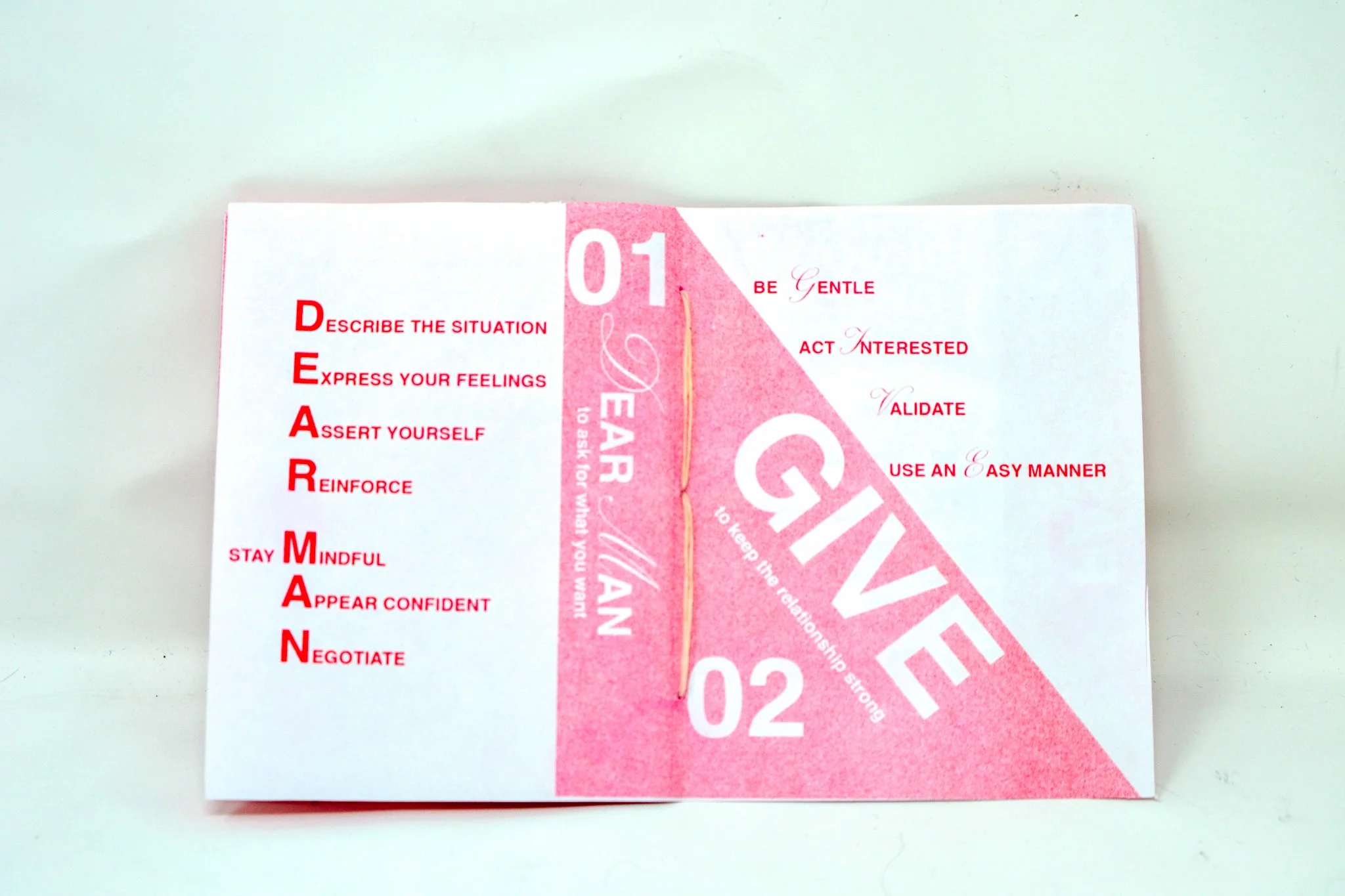
To convey the dense information in Dialectical Behavioral Therapy, I chose the zine format. As handmade artist books, zines carry an inherent accessibility: made to be passed around, written in, and returned to. They’re collectible, personal, approachable, and don’t carry the same literal and metaphorical weight as traditional DBT workbooks. Translating each of the four DBT modules into zine form reframes clinical material as something worth owning. Typography does the heavy lifting, restructuring dense therapeutic content into something legible to someone encountering DBT for the first time. The outcome is a series of pocket guides that meet people where they are, without requiring them to already be in treatment to understand them, and providing easy reference to skills when people need them most.
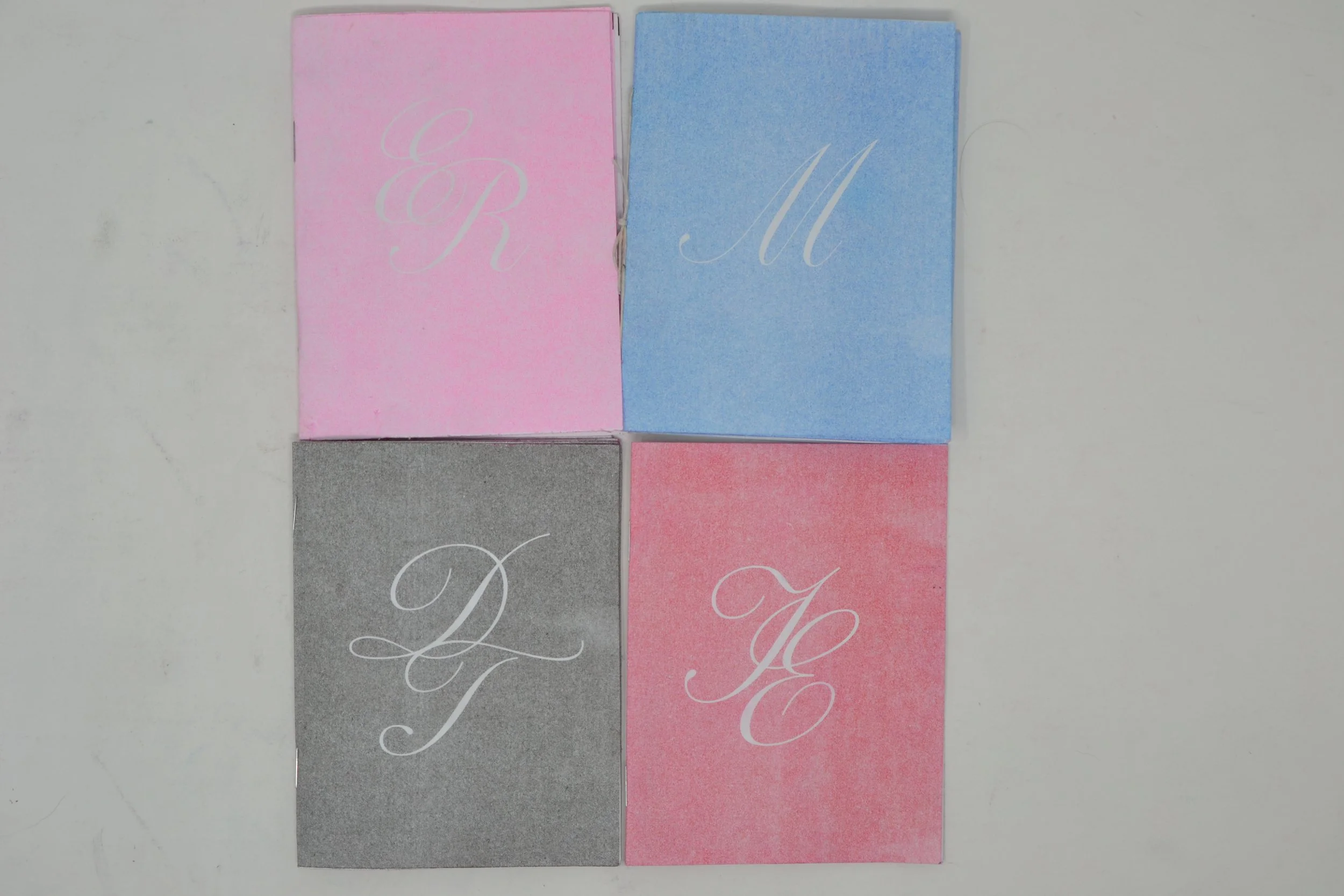
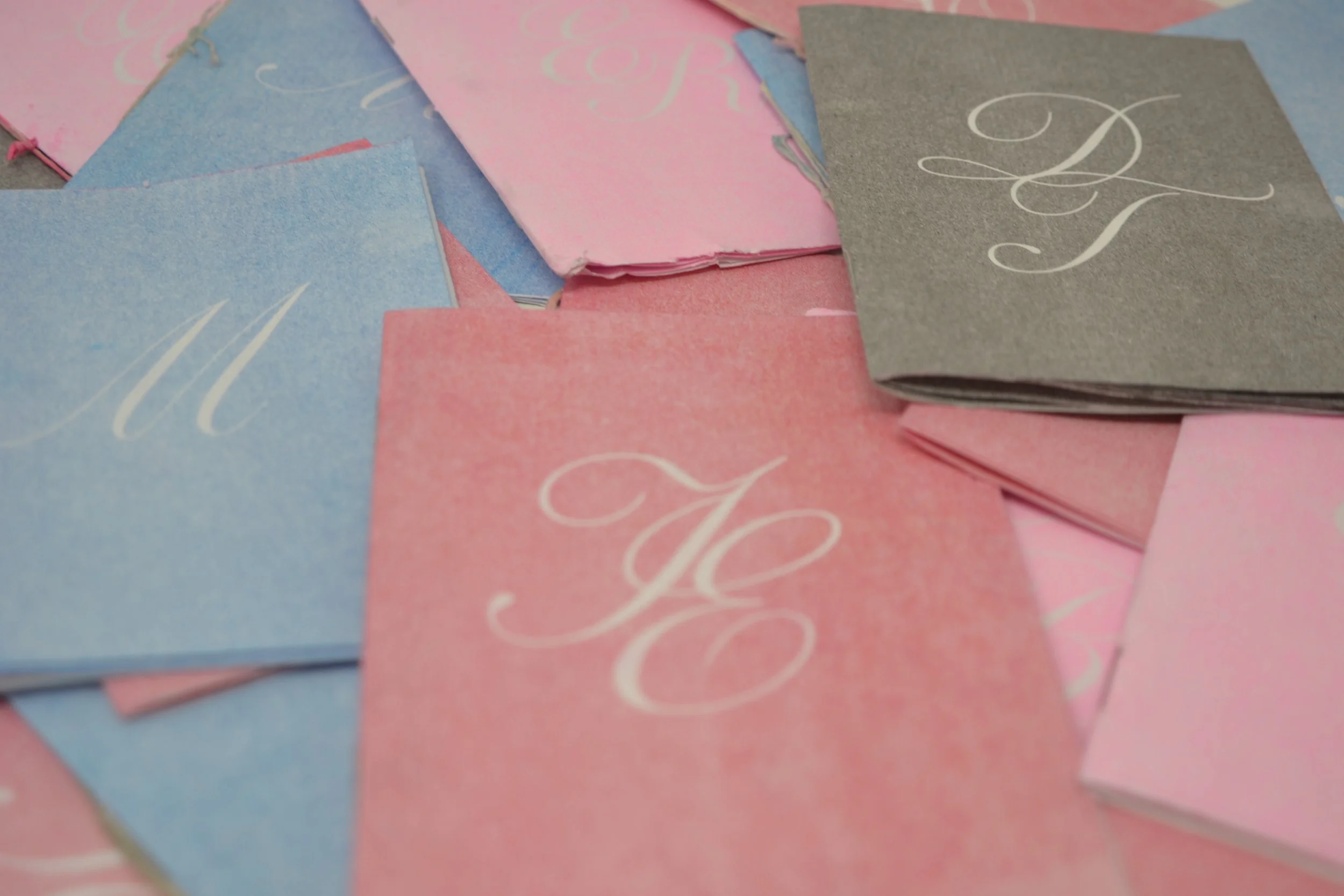
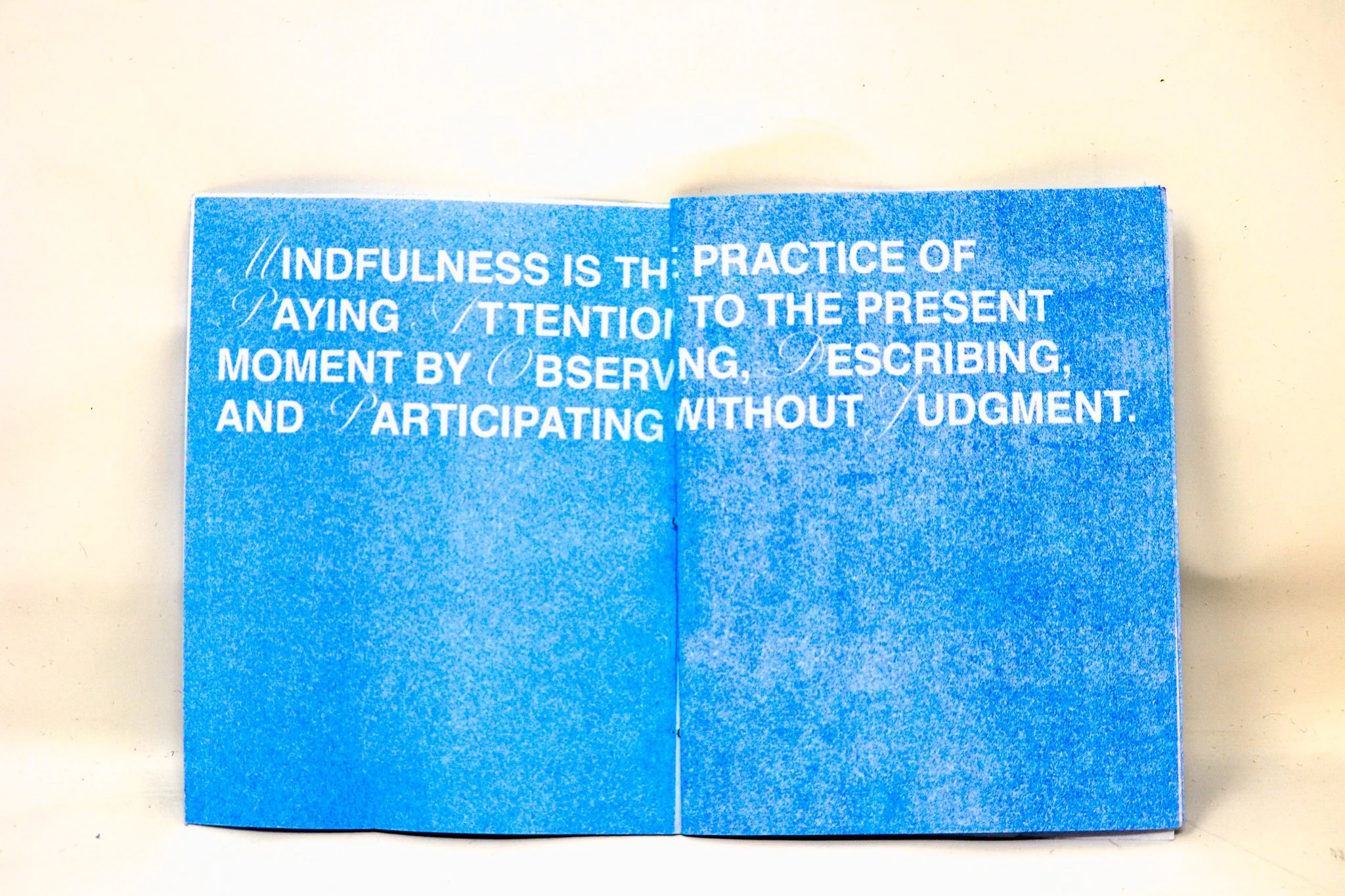
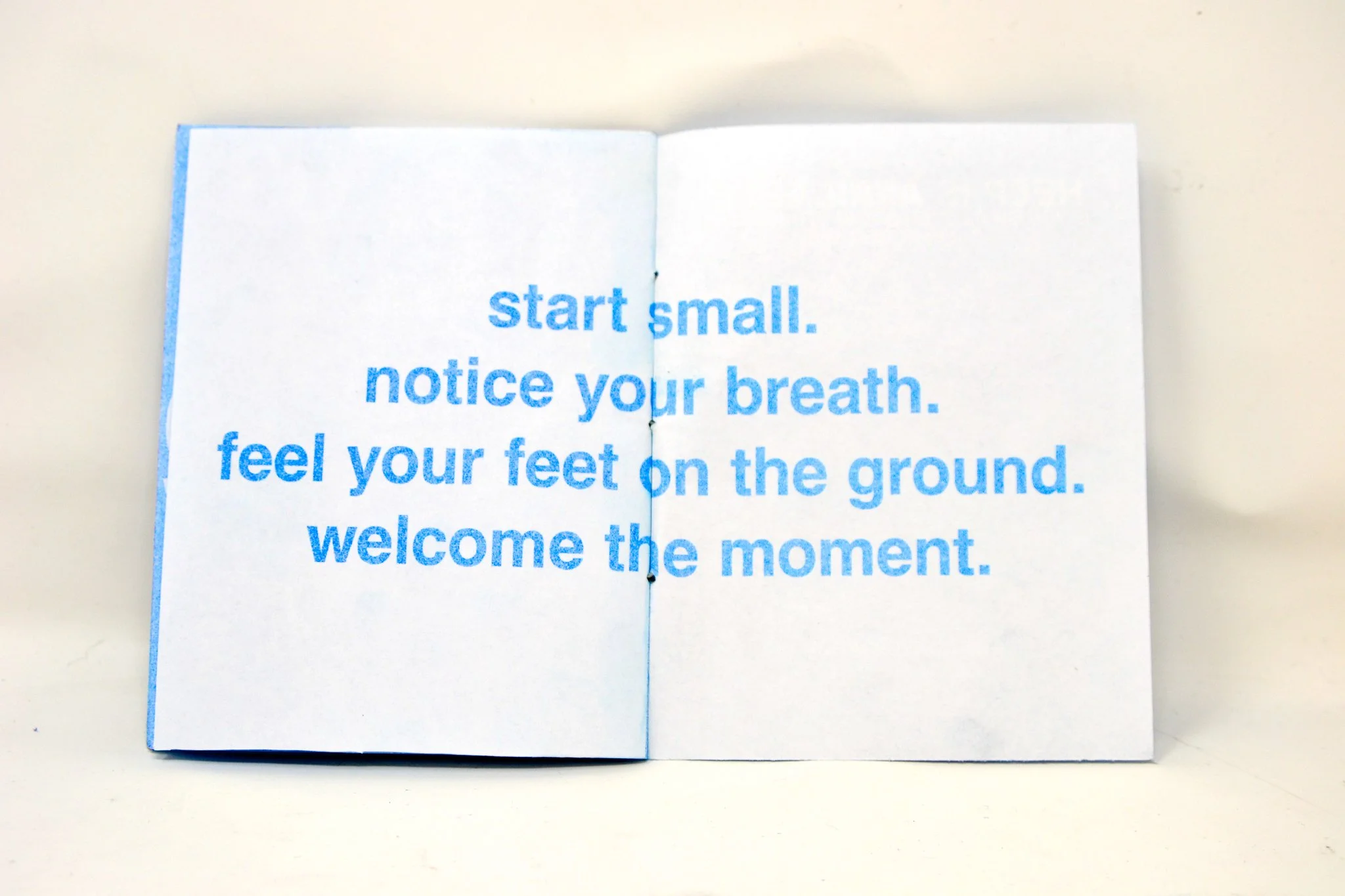
Mindfulness
Mindfulness is the practice of paying attention to the present moment by observing, describing, and participating in the present moment without judgment.
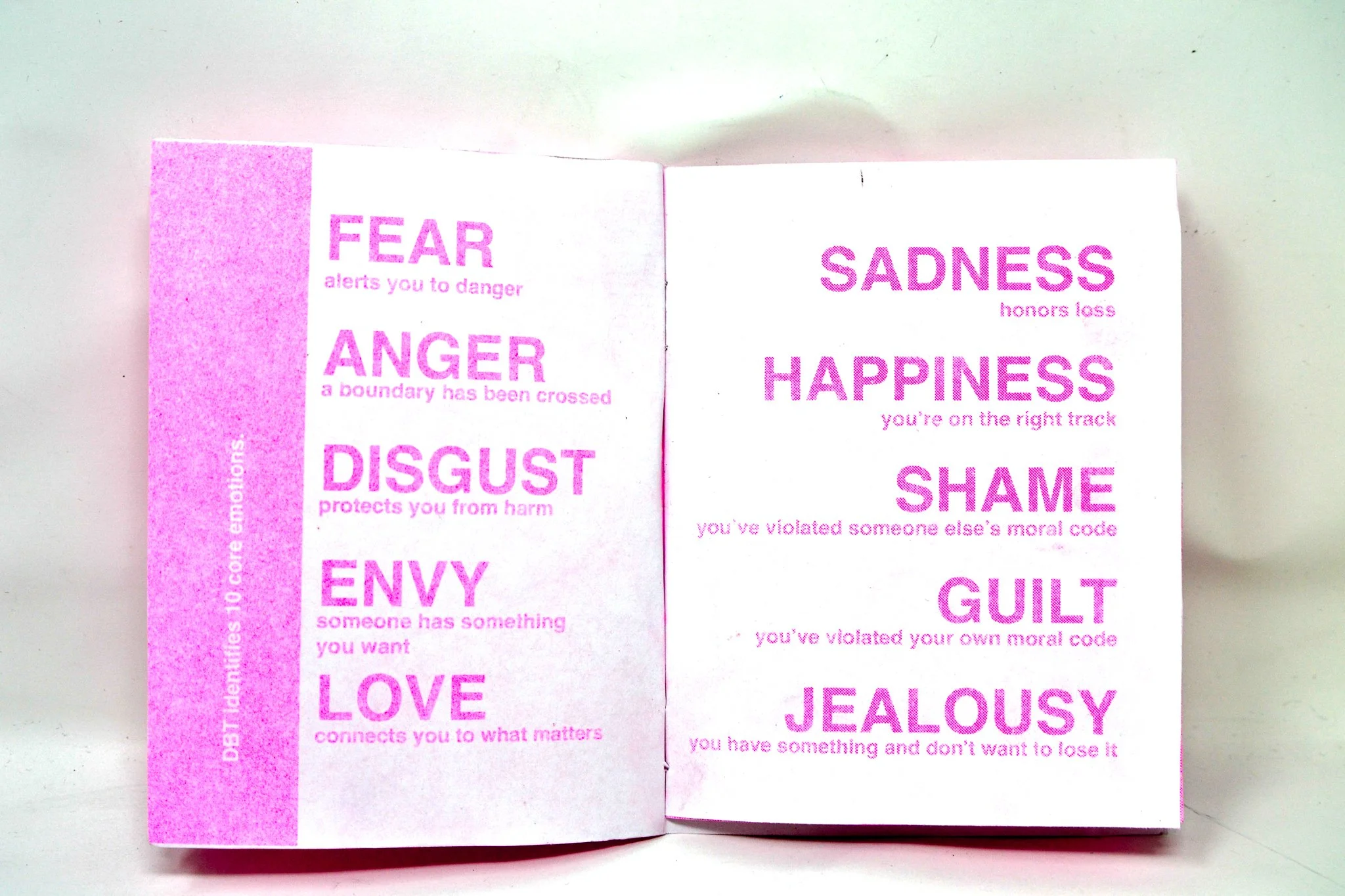
emotional regulATION
Emotional Regulation is the act of understanding your emotions, managing their intensity, and choosing how to respond appropriately.
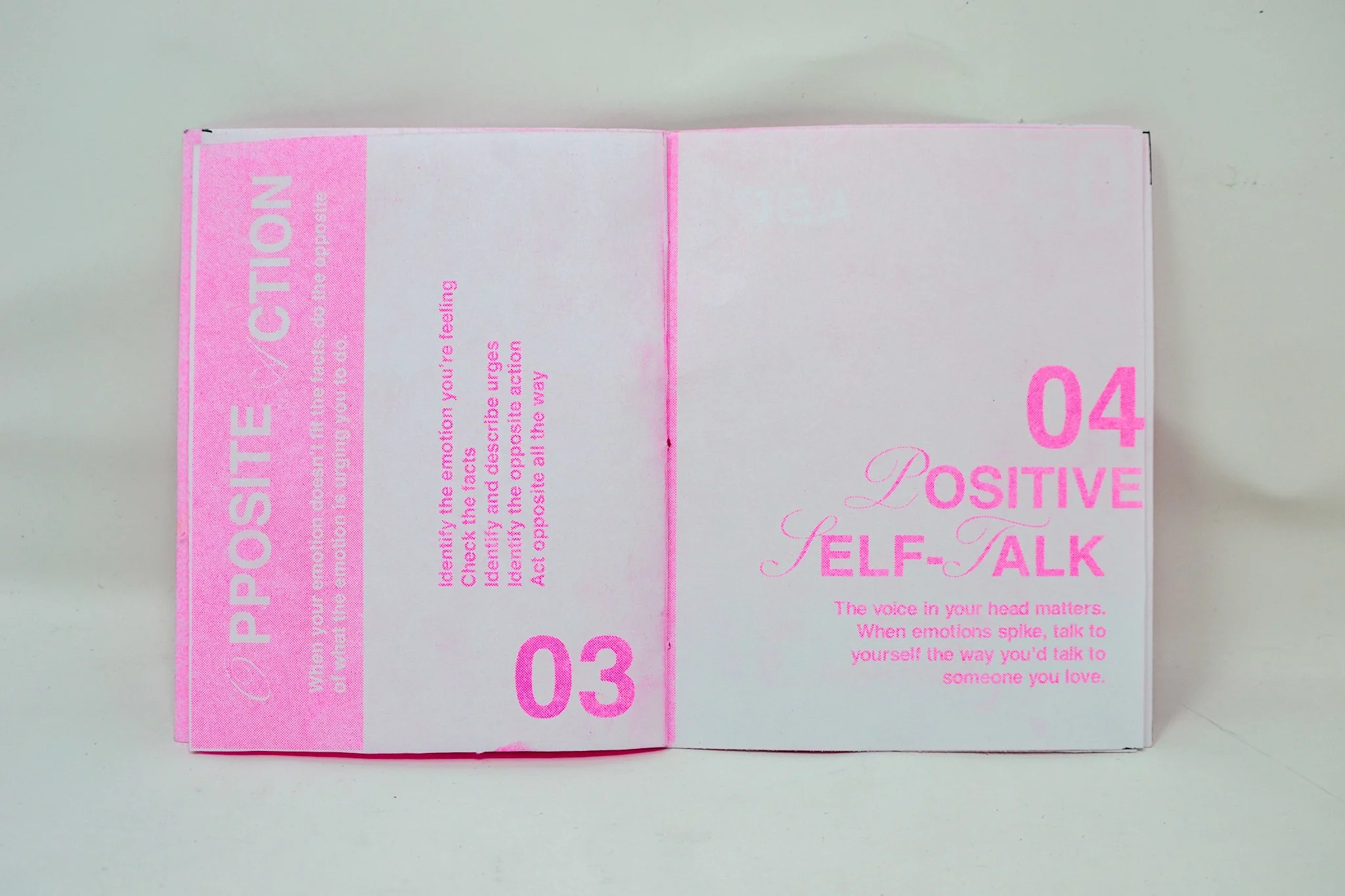
DISTRESS TOLERANCE
Distress tolerance skills are meant to help during a crisis, giving you the ability to perceive the environment as it is, without demanding change.
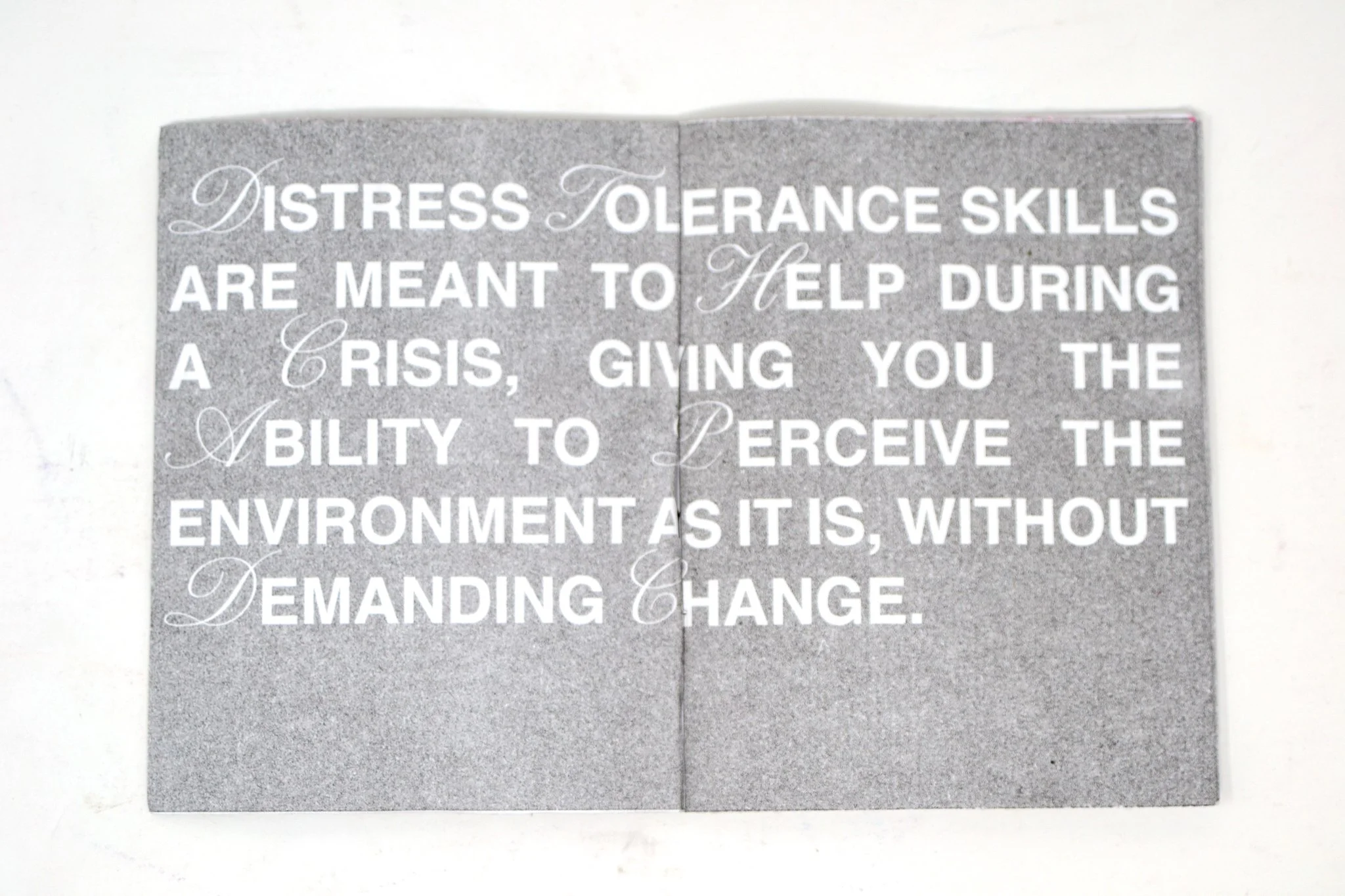
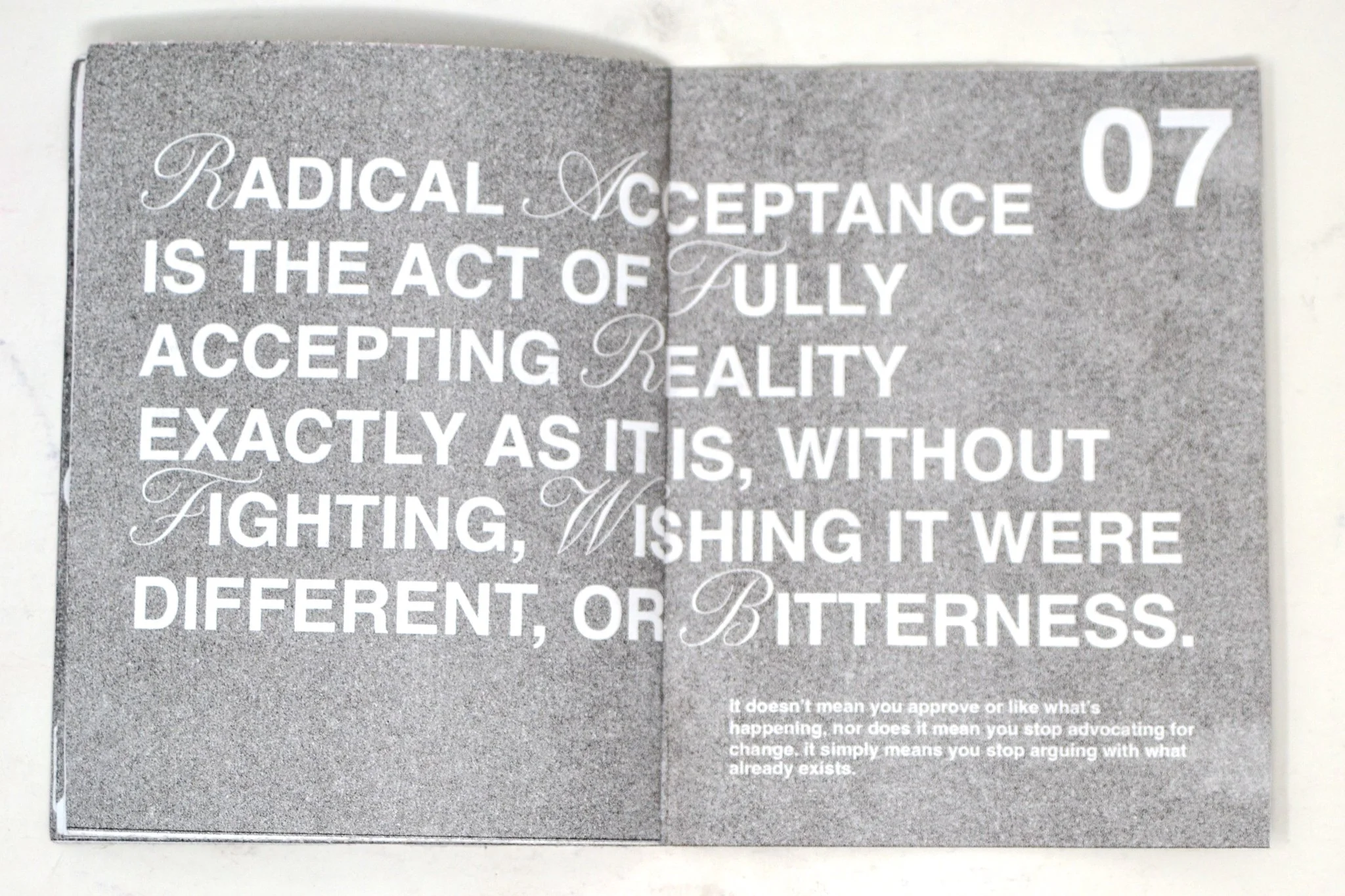
INTERPERSONAL EFFECTIVENESS
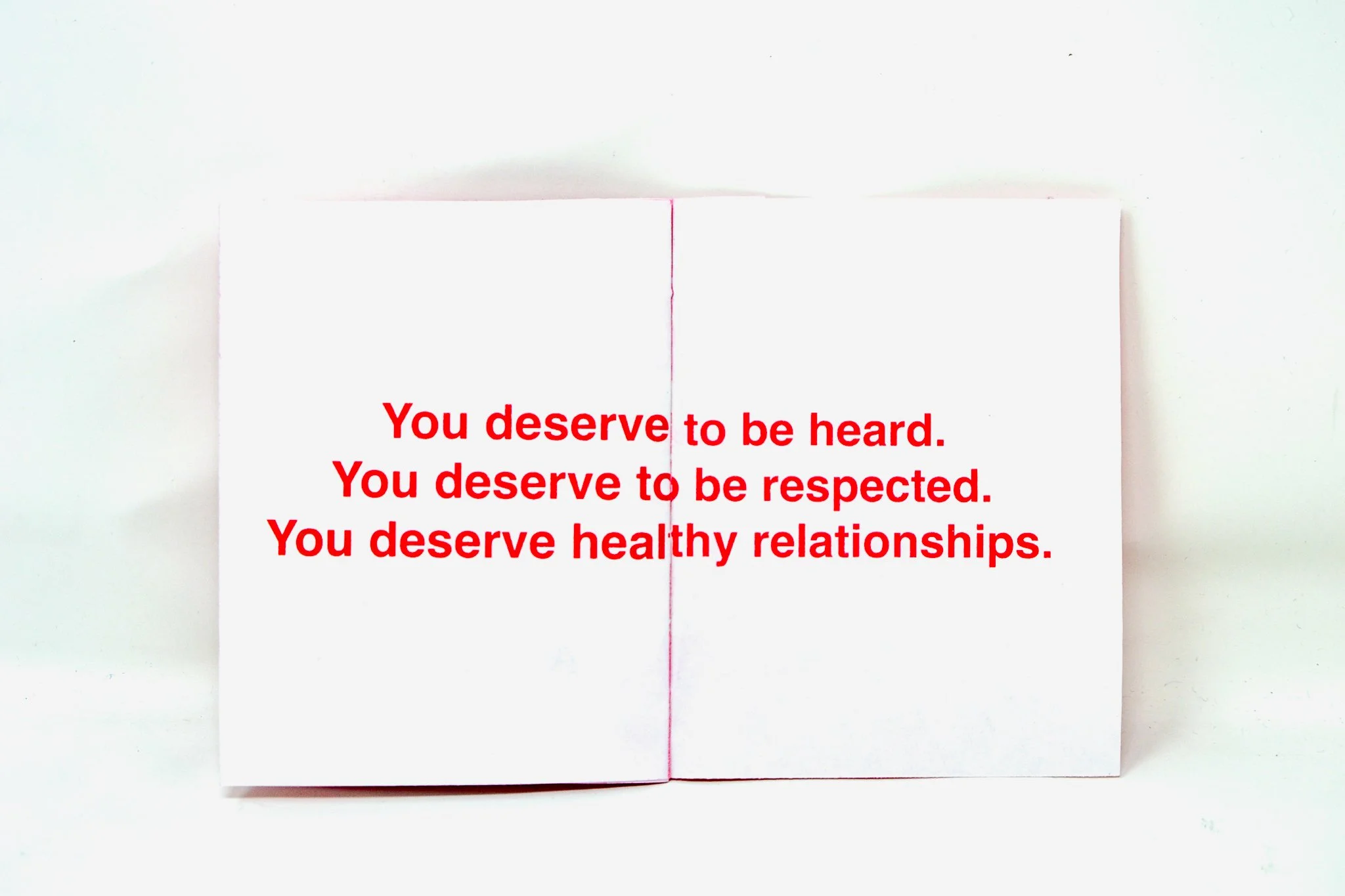
Interpersonal Effectiveness is the balance between asking for what you want or need while maintaining your self-respect and keeping relationships healthy.
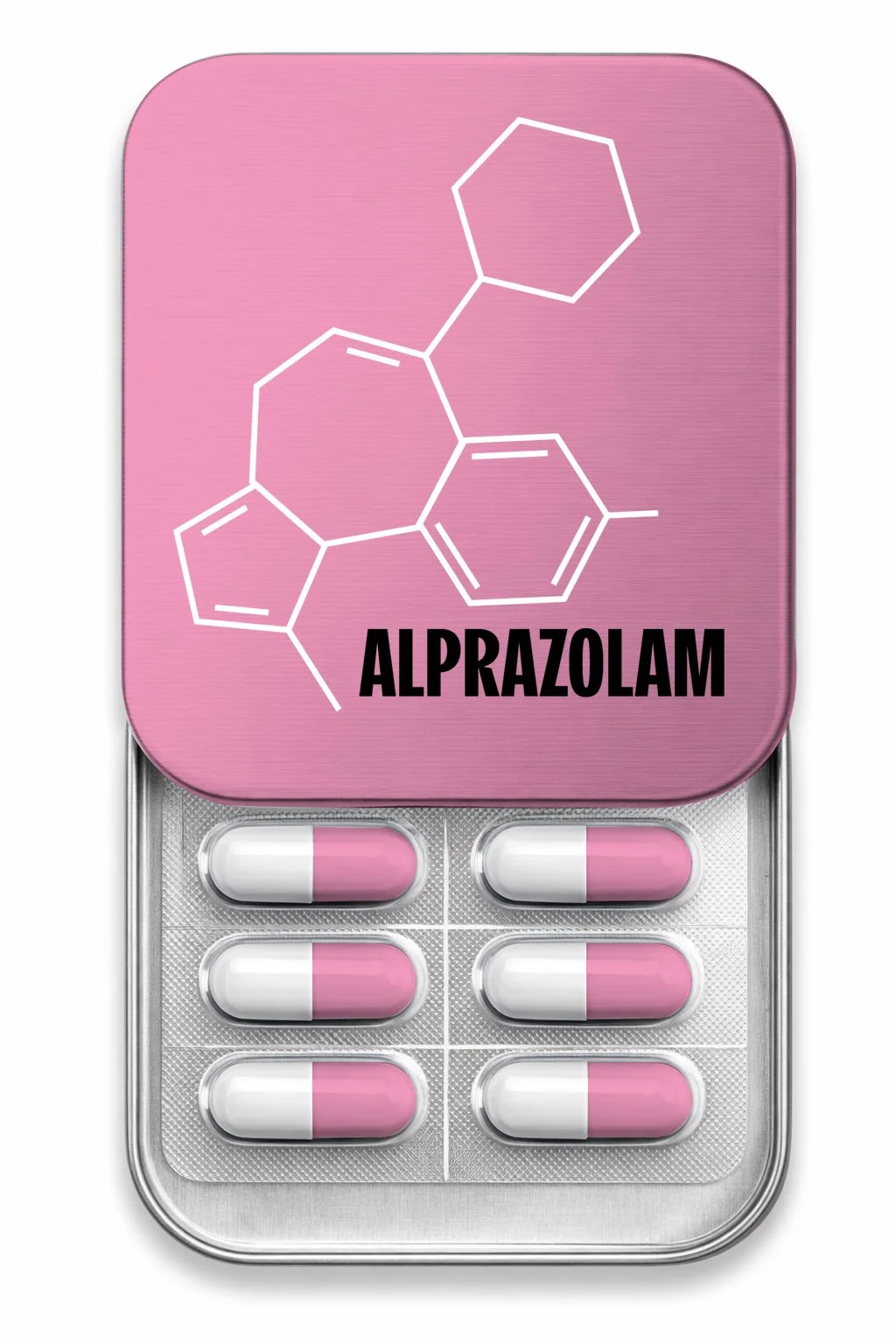
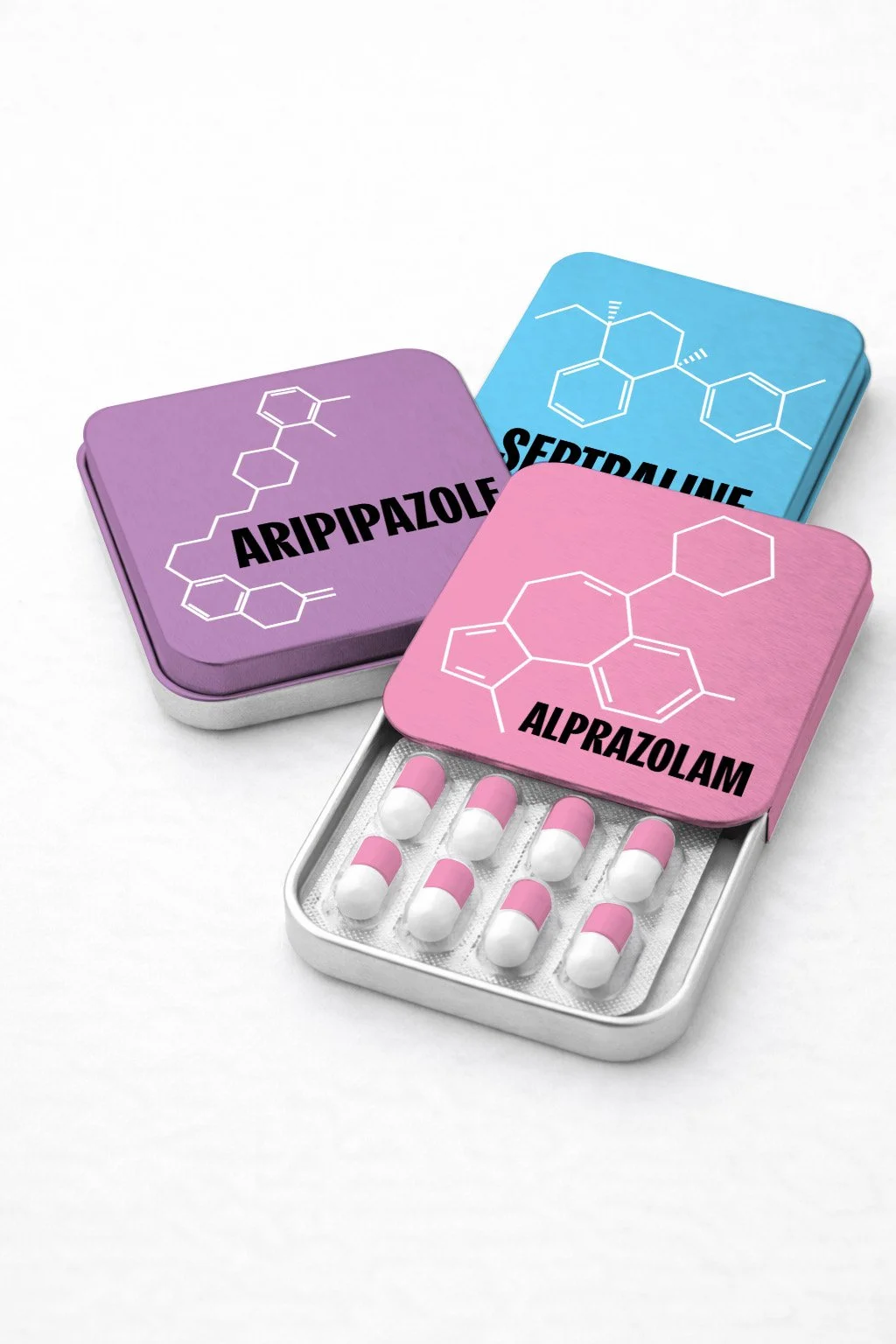
The second intervention rejects the visual language of traditional pill packaging outright. Generic amber bottles and clinical labels communicate nothing about the person taking the medication, and reinforce the sense that psychiatric treatment exists apart from ordinary life. The redesigned system replaces the standard bottle with a subtle metal tin, using each medication's chemistry as the foundation for its visual identity. Delivered directly to the door, the system also removes the practical friction of pharmacy lines, insurance issues, and the logistical barriers that quietly push people out of consistent care. By foregrounding what the medication actually is rather than obscuring it behind a generic form, the packaging reframes psychiatric medication as something precise, considered, and worth understanding. The goal is not decoration but reduction: less stigma in the daily act of opening a container.
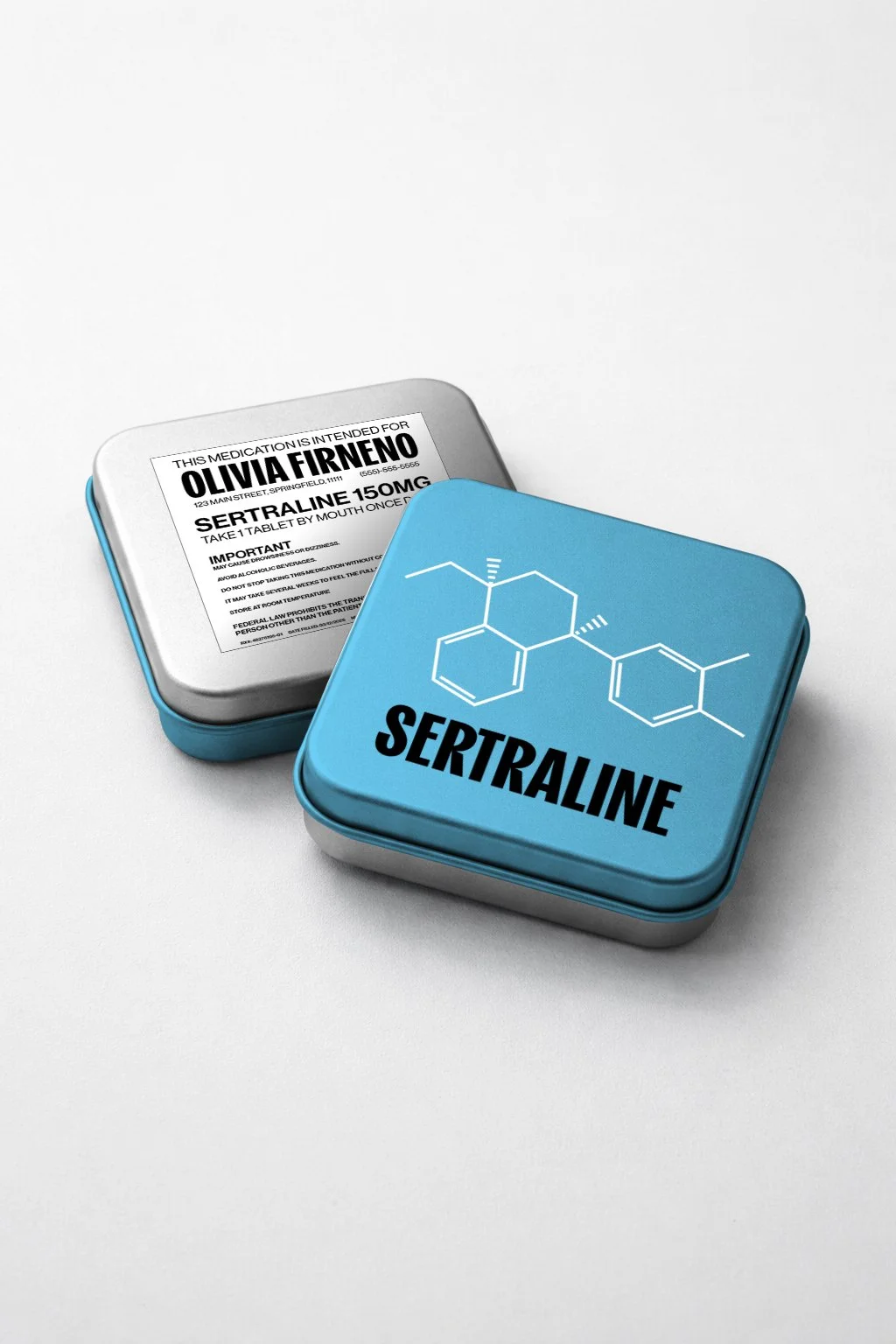
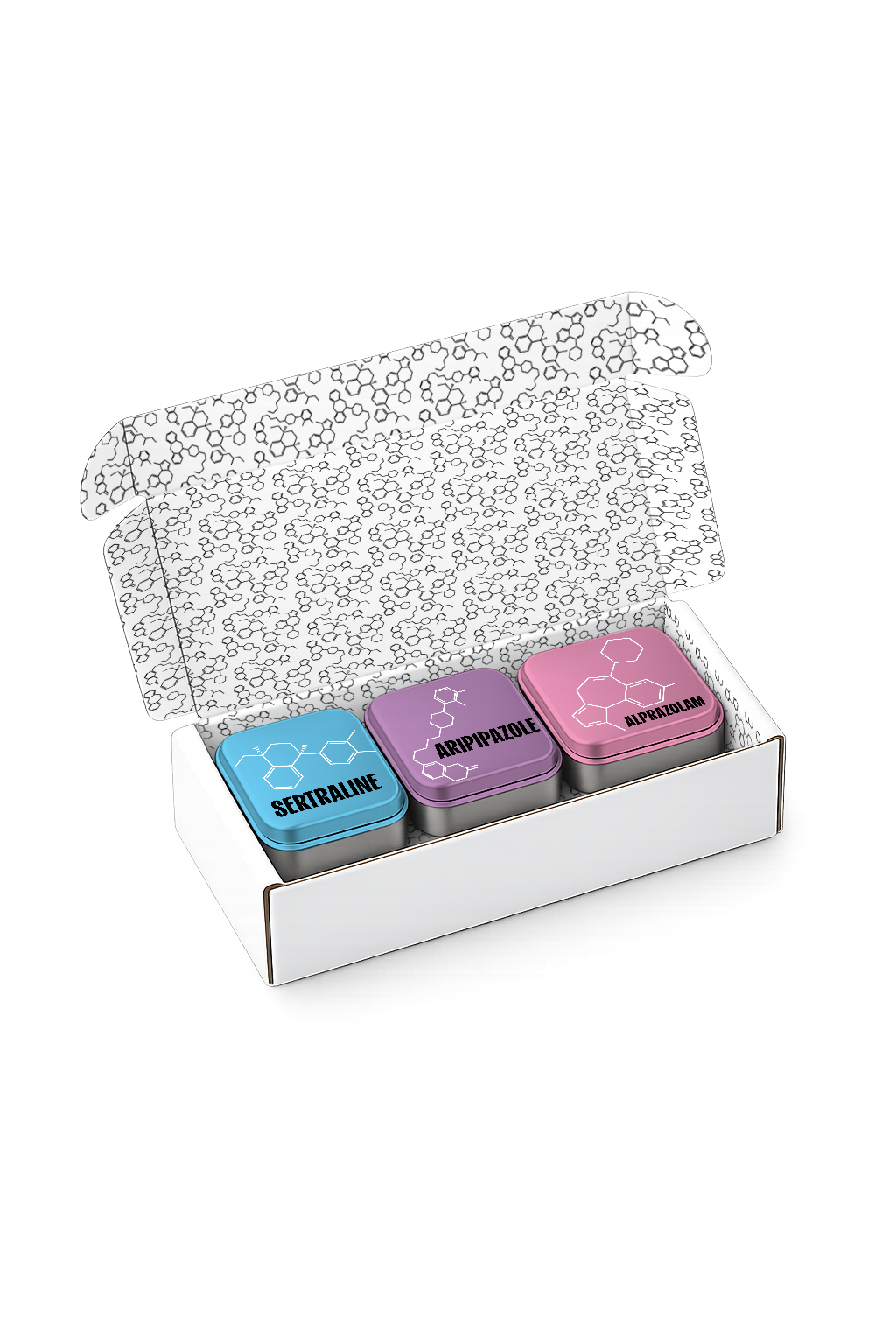
The Conversation produced four DBT zines and a psychiatric packaging system for three medications, presented together as a single argument: that the design of mental health materials is not a neutral act. Every formal choice either reinforces the distance between a person and their treatment or works to close it.
Graphic design cannot fix the mental health system. It cannot shorten waitlists, make therapy affordable, or eliminate the structural barriers that keep care out of reach. What it can do is change the relationship between a person and the materials that do reach them, and understand their needs. A zine someone actually opens. A container that does not feel like a confession. Small interventions with the potential for real consequences.
As designers, we can create the world we want to live in. The Conversation started there: with the belief that people navigating mental illness deserve materials that take them seriously, made by someone who understands that need.
Credits
Institution:
instructor:
Tyler School of Art and Architecture
Nathan Young
typefaces:
Helvetica, Kensington, Altesse
Adobe Photoshop, Adobe Indesign, Adobe Illustrator